Quick answer
As of September 2026, common electrical repairs in St. George, UT typically cost $125–$300 for an outlet, $130–$300 for a GFCI outlet, $85–$250 for a switch or dimmer, and $140–$350 for a ceiling fan on existing wiring, with a service call of $100–$200 usually covering the first hour. St. George Electric Pro matches Washington County homeowners with an independent, licensed electrician at no cost.
St. George Electric Pro · St. George, UT and Washington County
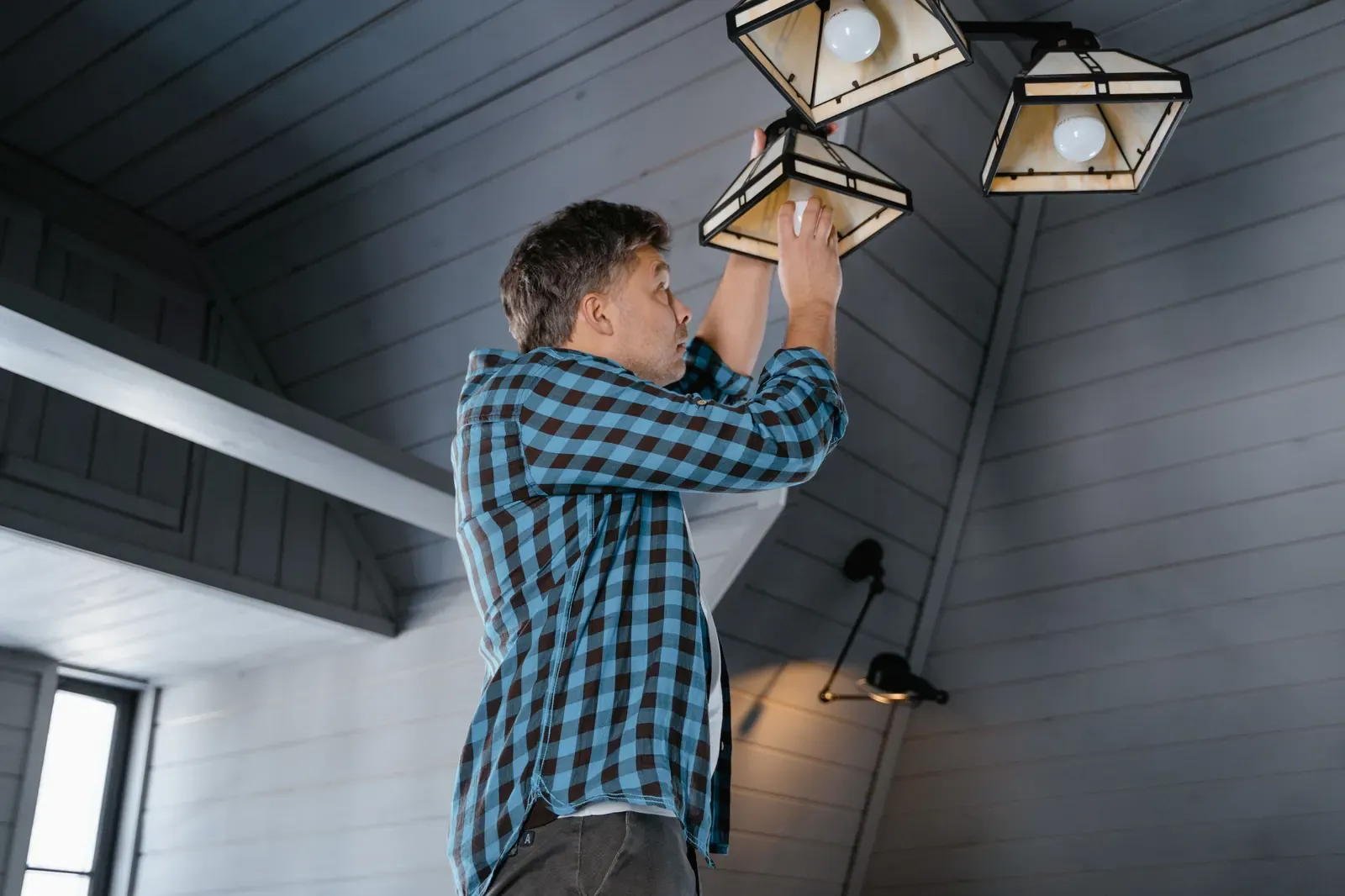
Repair or emergency? Sort that first
This page is for the jobs that can wait for a scheduled visit during business hours, which is where the money is saved: no after-hours add-on, and several small jobs bundled into one call. If any of the following is true, go to the emergency guide instead.
-
Burning smell or scorch marks
Emergency, not a repair call. See the emergency guide.
-
Warm cover plates or a hot dimmer
Same day. Heat at a device means a failing connection.
-
Buzzing, crackling, or sparks
Stop using the circuit and get someone out.
-
Two-prong outlets and no GFCIs
Not urgent, but a sign the house has never had an electrical update. Worth an inspection.
The common repair calls in Washington County
Local electricians see the same handful of jobs over and over, with a St. George twist: heat that ages plastics and connections, a housing stock that ranges from 1970s downtown homes to subdivisions still being framed, and a lot of garages being turned into workshops and charging bays.
-
Outlets: dead, loose, or not enough
A dead outlet is usually a tripped GFCI upstream, a failed back-stab connection, or a loose neutral. Adding outlets in a garage or workshop is the most common “new circuit” request.
-
GFCI outlets in kitchens, baths, garages, and outdoors
The outlets with TEST and RESET buttons. They wear out, they trip when they should, and older homes are often missing them where the code now requires them.
-
Switches, dimmers, and smart switches
A switch that is warm, crackles, or has to be jiggled is a failing switch. Three-way circuits and smart dimmers that need a neutral are the ones that go wrong on DIY attempts.
-
Ceiling fans
Swapping a fan onto an existing fan-rated box is a quick job. A wobbling fan, or a fan going where only a light was, needs a proper brace and box. In this climate a fan on every bedroom ceiling is a summer necessity.
-
Lighting: fixtures, recessed cans, exterior and landscape
Fixture swaps, LED retrofits into old cans, motion floods, and low-voltage landscape runs. Exterior work in St. George means UV-rated fixtures and boxes that will not cook.
-
A breaker that trips, but only sometimes
Not the whole-house trip (that is the panel guide). One circuit that trips when the microwave and the toaster run together is an overloaded circuit; one that trips at random may be a failing breaker or a nicked wire.
-
Appliance and equipment circuits
A dedicated line for a new range, a garage freezer, a mini-split, a pool pump, or a hot tub. Sized to the appliance, permitted, and inspected.
-
Pre-sale and post-purchase fixes
The inspection report says “double-tapped breaker,” “open ground,” or “reversed polarity.” These are small, specific, and worth fixing by a licensed electrician who can document it.
What small repairs cost in St. George
Typical ranges for a licensed electrician in the St. George area, blended from 2026 national cost surveys and local data points. Not a quote. Rates and service-call structure are explained on the hourly rate guide; every figure on this site lives on the electrician cost guide.
| Job | Typical range | What moves it |
|---|---|---|
| Replace or add a standard outlet Adding a new outlet on a new circuit costs more than swapping one. | $125–$300 | Adding a new outlet on a new circuit costs more than swapping one. |
| GFCI outlet (kitchen, bath, garage, outdoor) Required by code near water; a common failure point in older homes. | $130–$300 | Required by code near water; a common failure point in older homes. |
| Light switch or dimmer Three-way and smart switches at the high end. | $85–$250 | Three-way and smart switches at the high end. |
| Ceiling fan install (existing wiring and box) Add a new fan-rated box or a new switch leg and it can double. | $140–$350 | Add a new fan-rated box or a new switch leg and it can double. |
| Light fixture replacement Chandeliers, high ceilings, and new boxes cost more. | $150–$500 | Chandeliers, high ceilings, and new boxes cost more. |
| Recessed / can light Priced per light; most jobs are 4–8 lights. | $125–$300 per light | Priced per light; most jobs are 4–8 lights. |
| Troubleshooting / diagnostic visit (business hours) Finding why a circuit is dead or a breaker trips. Often credited toward the repair. | $150–$350 | Finding why a circuit is dead or a breaker trips. Often credited toward the repair. |
| Service call fee (usually covers the first hour) Some shops charge a separate trip fee instead of a service call. | $100–$200 | Some shops charge a separate trip fee instead of a service call. |
The pattern to notice: the service call is the expensive part of a small job. A single outlet swap costs what it costs because someone drove over. Three outlets, a fan, and a dimmer in the same visit rarely cost three times as much. Ask for a flat bundle price.
What “done right” looks like
- Devices on screw terminals, not back-stabbed. Push-in connections on the back of cheap outlets are the number-one source of dead outlets in this market.
- GFCI protection where the code puts it. Kitchen counters, bathrooms, garages, outdoors, laundry, and near sinks. Older homes are missing several of these.
- Fan-rated boxes under fans. A light box is not a fan box. A wobbling fan is telling you which one is up there.
- Correct breaker and wire size on any new circuit. A 20-amp breaker on 14-gauge wire is a fire waiting for a load.
- A labeled panel when they leave. If they opened the panel, the directory should be more accurate than when they arrived.
- A permit when the job is a new circuit or 240-volt equipment. The electrician pulls it; ask for the number.
Questions to ask before the work starts
- “What is your service call fee, and does it cover the first hour?”
- “Can you quote these jobs as one flat price?”
- “What is your Utah electrical contractor license number?” Look it up on the DOPL lookup while you wait.
- “Does this need a permit?” New circuits do; swaps generally do not.
- “Will you replace with the same grade of device, or better?” Contractor-grade tamper-resistant outlets are cheap and worth it.
How the match works
St. George Electric Pro is a referral service, not a contractor. Your list and your location go to an independent, licensed local electrician who does residential repair work in your part of Washington County. They contact you, quote the visit, and do the work; homeowners pay nothing to be matched. We work with electricians who report holding a Utah license, but we do not verify every license ourselves, so check the number they give you.