Quick answer
As of September 2026, upgrading to a 200-amp electrical panel in St. George, UT typically costs $1,600–$3,000 when the service entrance can stay, and $3,000–$4,500 when the mast, meter base, or service conductors change too. St. George Electric Pro matches Washington County homeowners with an independent, licensed electrical contractor at no cost.
St. George Electric Pro · St. George, UT and Washington County
Why panel capacity is a St. George problem specifically
Two local facts collide here. The first is heat. St. George recorded its hottest July on record in 2024 (an average high of 107.9°F) and ran 46 straight days at or above 100°F that summer, per National Weather Service figures reported by KUER. Central air conditioning in that climate is not a comfort load; it is the single largest continuous load in the house, and its compressor draws a start-up surge every cycle.
The second is growth. The St. George metro was the 8th-fastest-growing metro area in the country between July 2024 and July 2025 according to Census Bureau estimates reported by KSL. Growth means two kinds of panel work: older homes in downtown St. George, Santa Clara, and Washington City’s original neighborhoods that were wired for a different era of appliances, and newer homes whose owners are now adding the loads builders did not plan for, such as EV chargers, casitas, and hot tubs.
A 100-amp panel that was fine for a 1985 house with a swamp cooler is not fine for the same house with central AC, an electric range, a dryer, a pool pump, and a Level 2 charger. That is the whole story behind most upgrade calls in Washington County.
Signs your panel cannot keep up
Any one of these is a reason to have a licensed electrician look. Two or more, and the upgrade is usually the answer rather than another repair.
-
The main breaker trips in summer
Not one circuit: the whole house goes dark when the AC compressor kicks on while the dryer and oven are running. The panel’s total rating is the limit.
-
Lights dim when big loads start
A noticeable flicker when the AC, a pool pump, or the well pump starts. Voltage sag under load is a capacity or connection problem.
-
A 100-amp panel, or no empty slots
Most homes built before the 1990s have 100 amps. If every slot is full and a tandem breaker is already in there, there is nowhere for a new circuit to go.
-
A warm panel cover or breakers
Heat at the panel in August means connections working near their limit. Worth a same-week look before it becomes an emergency.
-
A recalled or discontinued brand
Federal Pacific (Stab-Lok), Zinsco, and some Sylvania and Challenger panels have documented failure histories. Electricians and home inspectors flag them on sight.
-
You are adding an EV charger, a casita, or a hot tub
A Level 2 charger alone wants a 40–60-amp circuit. On a full 100-amp panel that is the trigger for an upgrade more often than any failure.
What a panel upgrade actually involves
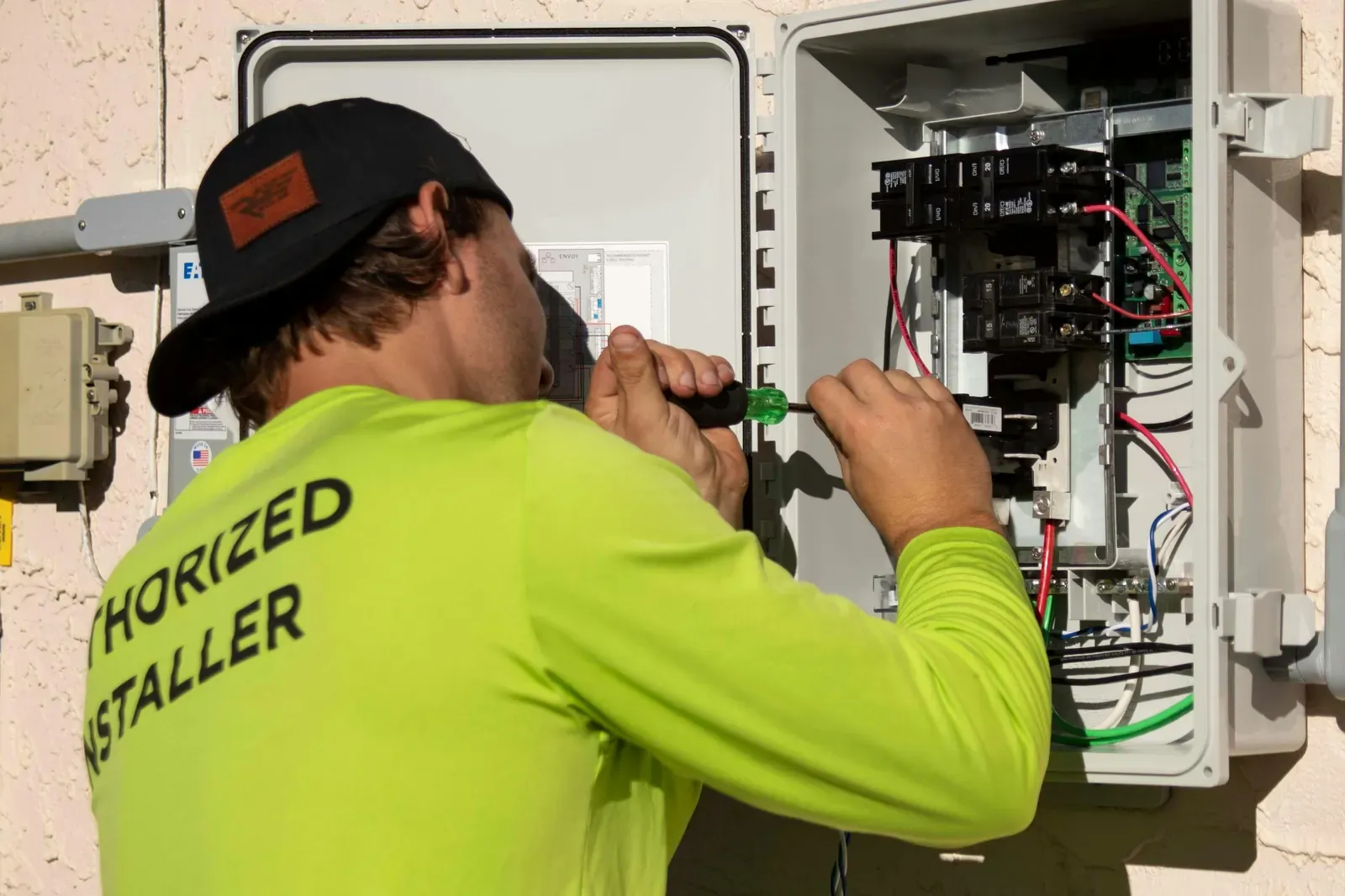
“Panel upgrade” covers two different jobs, and the price difference between them is the single most common surprise on quotes. A panel-only upgrade replaces the breaker box and breakers while keeping the existing meter and the service entrance conductors, because they are already rated for 200 amps (common on homes built from the late 1990s on). A service upgrade also replaces the meter base, the mast or underground feed, and the conductors, because the old service was genuinely 100 amps end to end. The second job involves the utility and costs more.
-
1. Load calculation and quote
The electrician tallies your existing and planned loads the way the electrical code requires, confirms whether the service entrance (the wiring from the meter) can carry 200 amps, and quotes the job.
-
2. Permit and utility coordination
Panel and service changes are permitted work. If the meter base or the service entrance conductors also change, the utility has to disconnect and reconnect, which sets the schedule.
-
3. The swap (usually one day)
Power off in the morning, old panel out, new panel and breakers in, every circuit re-landed and labeled. Expect a full day without power; a summer job means planning around the heat.
-
4. Inspection and close-out
The city or county inspector signs off, the utility re-energizes if it was involved, and you get a labeled panel directory. Keep the permit record for resale.
Utah adopts the National Electrical Code statewide through Title 15A of the Utah Code, with state amendments, and St. George City and Washington County each administer permits and inspections for their own jurisdictions. What that means for you is simple: the contractor pulls the permit, an inspector looks at the finished work, and the permit record follows the house. Ask for the permit number.
Panel upgrade cost in Washington County
Typical ranges for a licensed contractor in the St. George area, blended from 2026 national cost surveys and local data points. Not a quote. The panel upgrade cost guide has the full table, sources, and what moves each number.
| Job | Typical range | What moves it |
|---|---|---|
| Replace a 100-amp panel (same size) Like-for-like swap of a failed or recalled panel. | $800–$1,500 | Like-for-like swap of a failed or recalled panel. |
| Upgrade to a 200-amp panel The common upgrade for AC load, an addition, or an EV charger. Assumes the service entrance and meter can stay. | $1,600–$3,000 | The common upgrade for AC load, an addition, or an EV charger. Assumes the service entrance and meter can stay. |
| 200-amp upgrade with a new service entrance, mast or meter base Needed when the wiring from the utility drop to the panel is undersized for 200 amps. Involves the utility. | $3,000–$4,500 | Needed when the wiring from the utility drop to the panel is undersized for 200 amps. Involves the utility. |
| Add a subpanel (garage, casita, workshop) Only if the main panel has the capacity to feed it. | $400–$1,750 | Only if the main panel has the capacity to feed it. |
| Electrical permit for a panel change National range. St. George City and Washington County publish their own fee schedules; ask your electrician for the exact local fee. | $50–$300 | National range. St. George City and Washington County publish their own fee schedules; ask your electrician for the exact local fee. |
Three things push a quote toward the high end: a service entrance change (the utility gets involved), a panel that has to move (more wiring), and aluminum branch wiring or a mess of unlabeled circuits that has to be sorted out while the panel is open. One thing pulls it down: a newer home where only the panel itself is undersized.
Panel upgrades and EV chargers
In this market the two jobs travel together. A Level 2 charger wants a dedicated 40–60-amp circuit, and on a full 100-amp panel that circuit does not exist. Electricians will run the load calculation first; sometimes a load-managing charger avoids the upgrade, sometimes it does not. If you are planning a charger, read the EV charger installation guide alongside this one, and note that the federal 30C home-charger tax credit expired on June 30, 2026, so the upgrade math no longer includes it.
Questions to ask before you sign
- “Is this a panel-only upgrade or a full service upgrade?” Make the contractor say which, in writing.
- “Did you do a load calculation, and can I see it?” That is what justifies 200 versus 400 amps.
- “Who pulls the permit, and is the inspection included?” It should be the contractor, and yes.
- “What is your Utah electrical contractor license number?” Verify it on the DOPL lookup before the deposit.
- “Will you label every circuit?” A panel directory is part of the job, not an extra.
- “How long will power be off, and can we start early?” Matters in July.
How the match works
St. George Electric Pro is a referral service, not a contractor. Your request goes to an independent, licensed local electrical contractor who does panel and service work in your part of Washington County. They contact you, look at the panel (in person or from photos), run the load calculation, and quote the job. They set the price and do the work; homeowners pay nothing to be matched. We work with contractors who report holding a Utah license, but we do not verify every license ourselves, so check the number they give you.