Quick answer
As of September 2026, replacing a standard outlet in St. George, UT typically costs $125–$300, a GFCI outlet $130–$300, and a switch or dimmer $85–$250; many “dead outlet” calls turn out to be a tripped GFCI you can reset yourself. St. George Electric Pro matches Washington County homeowners with an independent, licensed electrician at no cost.
St. George Electric Pro · St. George, UT and Washington County
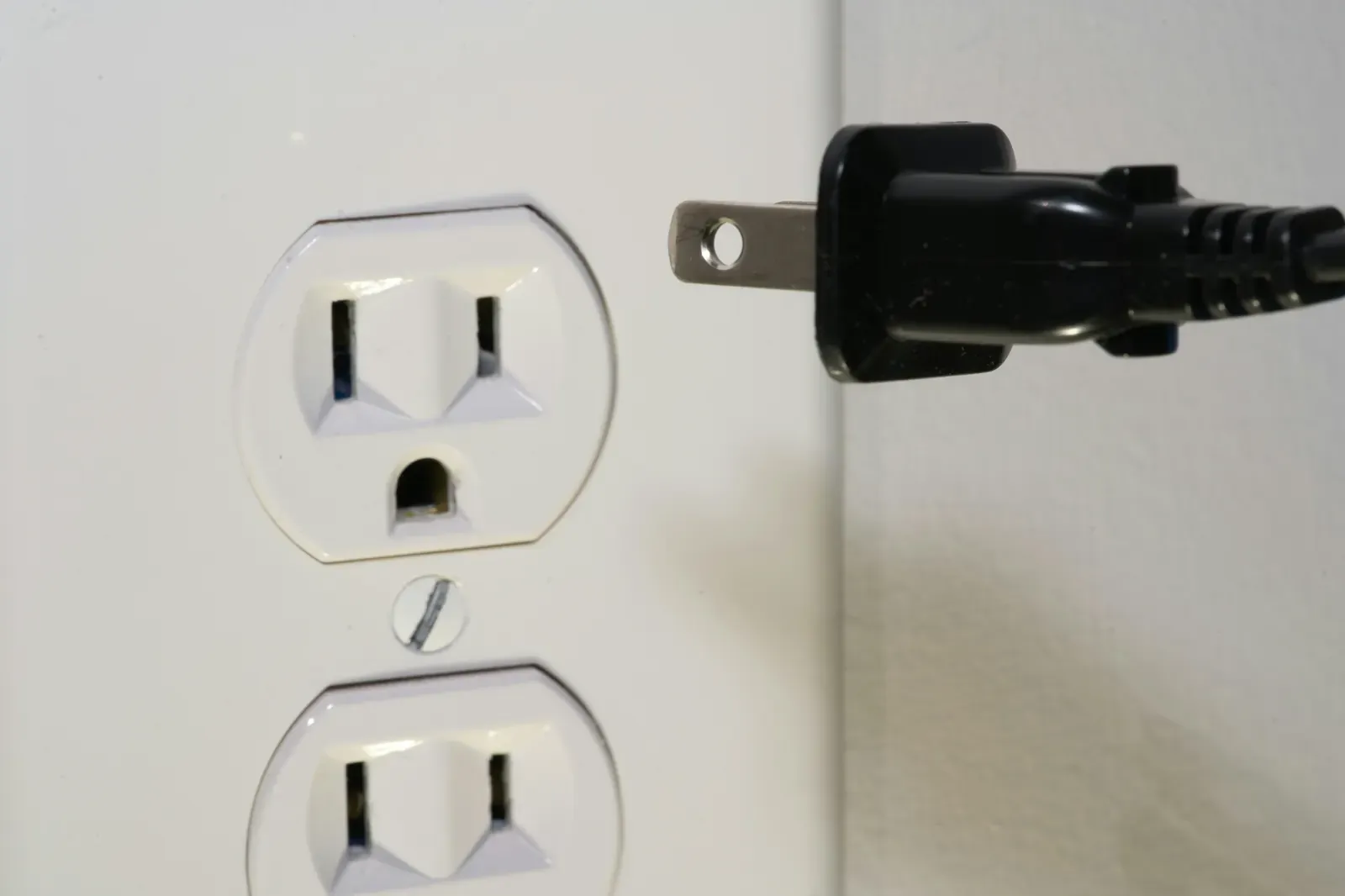
The common outlet and switch problems
Outlets and switches are the parts of a home’s wiring you touch every day, and they wear out. Most problems fall into a short list, and knowing which one you have tells you whether it can wait, whether you can fix it with a button, or whether the breaker should go off tonight.
-
A dead outlet
Most often a tripped GFCI elsewhere on the circuit, a tripped breaker, or a loose connection at this outlet or the one before it.
-
A warm or discolored outlet or switch
Heat means a poor connection or an overload. Stop using it and switch off the breaker if it is hot. This one is not a wait-for-the-weekend repair.
-
Plugs that fall out
Worn contacts. Replacing the receptacle fixes the grip; the electrician also checks the connections behind it, which wear the same way.
-
A GFCI that will not reset
The device may have failed, or it may be detecting a real fault such as moisture in an outdoor box. Unplug everything downstream and try again.
-
Sparks when you plug something in
A tiny spark under load can be normal. Repeated or large sparks, or sparks with a smell, mean the receptacle or its connections are failing.
-
Switches that buzz or lights that flicker
Often a dimmer mismatched to LED bulbs, and sometimes a loose connection. A hot dimmer is worth a call.
-
Two-prong outlets
Common in older homes. A three-prong adapter or a three-prong outlet with no ground behind it gives false reassurance. There are proper fixes, covered below.
-
Not enough outlets, or in the wrong places
Extension cords and power strips as permanent furniture. Adding outlets is routine work, usually cheaper when bundled into one visit.
Before you call: find the tripped GFCI
A cluster of dead outlets in the bathrooms, garage, kitchen, or outdoors is, more often than not, one tripped GFCI somewhere else. These steps cost nothing and take a few minutes.
-
Note exactly which outlets are dead
Check every outlet in the bathrooms, kitchen counters, garage, laundry area, and outdoors. GFCI-protected outlets are often grouped, and the controlling GFCI may be in another room.
-
Unplug everything from the dead outlets
A damaged cord or a wet appliance downstream will trip the GFCI again as soon as you reset it.
-
Find every GFCI outlet in the house
Look for outlets with TEST and RESET buttons. Check the garage, every bathroom, the kitchen, near the laundry, and outdoor outlets, including one behind a patio cover or near the pool equipment.
-
Press RESET firmly on each one
It should click and stay in. If one will not reset, leave it and move on; it may be the one with the problem.
-
Check the breaker panel
Some homes use GFCI breakers instead of outlets. Look for a breaker with a TEST button that is tripped, and reset it once.
-
Plug things back in one at a time
If the GFCI trips when a particular item is plugged in, that item is the problem. If it trips with nothing plugged in, or will not reset, request an electrician.
Resetting a GFCI or a breaker is the limit of what these guides suggest doing yourself. Do not remove cover plates or pull devices out of the wall; a switched-off breaker does not always mean a dead box, and some boxes carry more than one circuit.
Warm, buzzing, or sparking: when it cannot wait
Heat is the sign that matters most. A receptacle whose connections have loosened, often ones where the wires were pushed into holes in the back of the device instead of wrapped around the side screws, develops resistance, and resistance makes heat. Heat loosens the connection further. Left alone, that cycle ends with a melted device, a scorched box, or worse. The electrical fire warning signs guide covers the full list; for outlets and switches, the short version is: warm plate, discoloration, a smell, buzzing, or repeated sparks all mean unplug, switch the breaker off, and book a repair now rather than later.
St. George adds a local wrinkle. Garage outlets feeding a second refrigerator or a freezer, and outdoor outlets feeding pool equipment or a patio heater, carry steady loads through months of extreme heat. They are where worn connections show up first.
What current code expects of a new outlet or switch
When an electrician replaces a device, the new one is expected to meet today’s requirements, not the ones in force when your house was built. That is why a “simple swap” sometimes becomes a GFCI or a different box. The main ones:
-
GFCI protection in wet and damp locations
Bathrooms, kitchen counters, garages, laundry areas, outdoors, and near sinks. Replacing an outlet in one of these spots usually means replacing it with GFCI protection.
-
Tamper-resistant receptacles
Outlets with internal shutters that block objects other than a plug, now standard in homes. A new outlet should be tamper-resistant.
-
AFCI protection on living-area circuits
Arc-fault protection for bedrooms and most living spaces in newer homes. Extending or modifying those circuits can bring the requirement with it.
-
A neutral wire at switch boxes
Newer homes have one; many older ones do not. Most smart switches need it, which is the most common reason a smart-switch install gets complicated.
Utah adopts the National Electrical Code statewide, and local building departments enforce it. Your electrician knows which requirements apply to the job and whether it needs a permit.
Two-prong outlets: the three honest options
Two-prong outlets mean no equipment ground at that box. They are most common in the county’s older homes, around downtown St. George and the older parts of Santa Clara and the smaller towns. What not to do is install a three-prong outlet with nothing connected to the ground screw, or use a cheater adapter; both look grounded and are not. The legitimate options:
-
Run a proper ground
Add an equipment grounding conductor back to the panel so a three-prong outlet is truly grounded. The best fix; cost depends on access.
-
GFCI protection, labeled
The code allows replacing an ungrounded outlet with a GFCI (or protecting it with an upstream GFCI) and labeling it “No Equipment Ground.” It protects people from shock, though it does not provide a ground for surge protectors.
-
A two-prong replacement
Replacing a worn two-prong outlet with a new two-prong outlet is permitted where no ground exists. It restores grip, not safety features.
Which one makes sense depends on what the outlet feeds. A bedroom lamp outlet is fine with GFCI protection; an outlet for a computer, TV, or anything on a surge protector really wants a true ground.
Switches, dimmers, and smart controls
- Dimmers and LEDs. Older dimmers were made for incandescent bulbs. With LEDs, they can buzz, flicker, or fail to dim smoothly. The fix is usually an LED-rated dimmer matched to the bulbs.
- Three-way switches. Two switches controlling one light are wired differently from a single switch, and a mis-wired replacement is a common reason one switch “stops working.”
- Smart switches. Most need a neutral wire in the switch box. If your box does not have one, there are no-neutral models, or the electrician can bring a neutral in.
- Outdoor and landscape lighting. Switched outdoor fixtures and timers follow the same rules. If you live in Ivins, outdoor fixtures also have to meet the city’s dark-sky rules; the county service areas page summarizes them.
Adding outlets and USB outlets
Adding an outlet on an existing circuit is routine. Adding one on a new circuit, for a garage freezer, a workbench, or a home office, costs more because it means a new breaker and a new run from the panel, and it depends on the panel having space. USB and USB-C outlets are a straight swap for a standard outlet in most boxes, though they are slightly deeper; a crowded box may need a deeper box. If your panel is full, the 200-amp panel guide explains the difference between running out of space and running out of capacity.
Aluminum wiring
Some homes and additions wired between 1965 and the mid-1970s used aluminum branch wiring, which needs specific connection methods at every outlet and switch. If your home is from that era, tell the electrician before they touch a device. The fire warning signs guide summarizes the Consumer Product Safety Commission’s recognized repairs.
What outlet and switch work costs
Typical ranges for licensed electricians in the St. George area, not quotes. Sources and methodology are on the electrician cost guide.
| Job | Typical range | What moves it |
|---|---|---|
| Replace or add a standard outlet Adding a new outlet on a new circuit costs more than swapping one. | $125–$300 | Adding a new outlet on a new circuit costs more than swapping one. |
| GFCI outlet (kitchen, bath, garage, outdoor) Required by code near water; a common failure point in older homes. | $130–$300 | Required by code near water; a common failure point in older homes. |
| Light switch or dimmer Three-way and smart switches at the high end. | $85–$250 | Three-way and smart switches at the high end. |
| Service call fee (usually covers the first hour) Some shops charge a separate trip fee instead of a service call. | $100–$200 | Some shops charge a separate trip fee instead of a service call. |
| Licensed electrician, hourly rate Journeyman at the low end, master electrician at the high end. Many shops quote flat rates for common jobs instead. | $60–$110 per hour | Journeyman at the low end, master electrician at the high end. Many shops quote flat rates for common jobs instead. |
The service call is the fixed part of any small repair, which is why one outlet costs almost as much as three. Make a list before the electrician comes: every dead or loose outlet, the switch that buzzes, the two-prong outlets you want dealt with, and the spot where you keep wishing there were an outlet. The hourly rate guide explains how service calls and flat rates work.
Hiring for small jobs
Small jobs are where unlicensed work is most tempting and least visible. Ask for a Utah contractor license number and check it; the license verification guide shows how. St. George Electric Pro is a referral service: we pass your request to an independent, licensed electrician who covers your area, and they quote and do the work.